
August 14, 2026
Endodontics is a specialty centered on preserving natural teeth, and that mission extends well beyond the walls of a dental practice. Advances in diagnosis, treatment, technology, and biologically based care are strengthened when clinicians and educators share knowledge across institutions and across borders.
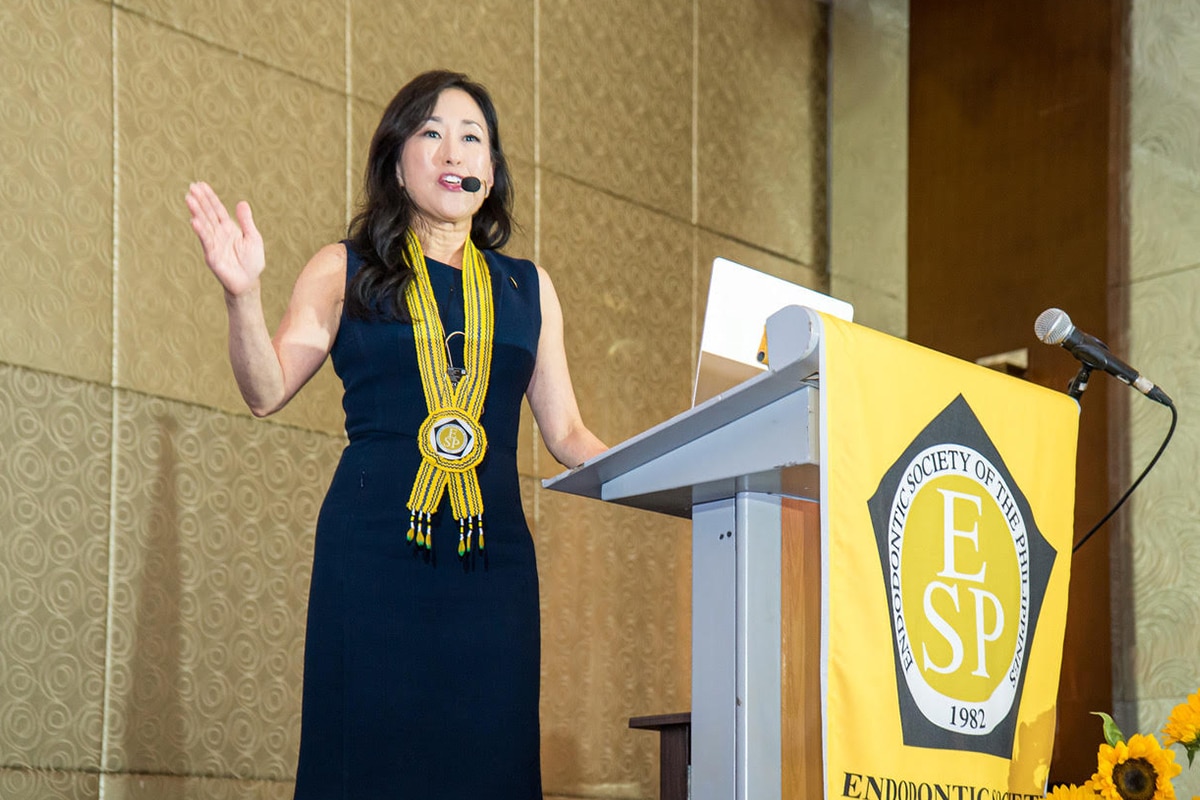
At Perry Endodontics, that commitment to education and professional leadership is an important part of how we continue to provide high-quality specialty care. In July 2026, Dr. Elizabeth Shin Perry traveled to Manila, Philippines, as an invited international speaker at the 23rd Biennial Convention of the Endodontic Society of the Philippines (ESP). The meeting was held July 12–13, 2026, at Edsa Shangri-La Manila under the theme “Looking Beyond the Horizon.”
Dr. Perry, President-Elect of the American Association of Endodontists (AAE), was invited to present a 90-minute lecture on contemporary tooth preservation and was also honored to serve as the inducting officer during the Society’s leadership transition.
Expanding Horizons in Tooth Preservation
Dr. Perry’s presentation, “Expanding Horizons in Tooth Preservation: The Endodontic Perspective,” focused on a principle that guides care at Perry Endodontics: whenever possible, the natural tooth should be carefully evaluated for preservation before extraction is considered.
Modern endodontics encompasses far more than conventional root canal treatment. Improvements in 3D imaging, magnification, microsurgical techniques, biomaterials, and interdisciplinary treatment planning have expanded what endodontists can diagnose and treat successfully. These advances can provide additional options for teeth that may once have been considered difficult to save.
Through clinical cases, Dr. Perry discussed how endodontists can approach complex treatment decisions with the goal of preserving both the tooth and as much healthy tooth structure as possible. Her presentation highlighted advanced diagnosis, contemporary endodontic treatment, endodontic microsurgery, biomaterials, and collaboration with restorative and other dental specialists.
The central message was that the boundaries of tooth preservation continue to expand. Careful diagnosis and specialty evaluation can be particularly important when a patient is facing a complex dental problem or has been told that extraction may be necessary.
An International Leadership Honor
Dr. Perry’s participation in the convention extended beyond the scientific program. Following the day’s lectures, she was honored to serve as an inducting officer during the Endodontic Society of the Philippines induction ceremonies, including the transition of leadership to incoming ESP President Dr. Katrina De Luna.
As President-Elect of the American Association of Endodontists, Dr. Perry welcomed the opportunity to represent the specialty and to recognize colleagues who are assuming leadership roles within the international endodontic community.
Professional organizations such as the AAE and ESP serve different countries and communities, but they share many of the same goals: advancing endodontic knowledge, supporting education, strengthening the specialty, and improving care for patients who want to retain their natural teeth. Leadership exchanges between organizations help build relationships that can support these goals well into the future.
Why International Education Matters to Patient Care
Teaching and speaking at professional meetings require clinicians to continually review evidence, analyze treatment outcomes, evaluate emerging technologies, and think critically about how new information should be applied in clinical practice. Those activities can directly strengthen the way complex cases are approached at home.
At Perry Endodontics, specialty care begins with diagnosis and treatment planning. Our doctors evaluate the individual tooth, the surrounding structures, the patient’s symptoms, and the long-term restorative considerations before recommending treatment. Depending on the situation, tooth-preserving care may include root canal treatment, endodontic retreatment, vital pulp therapy, endodontic microsurgery, or management of conditions such as dental trauma, resorption, or cracked teeth.
The goal is not simply to perform a procedure. It is to determine whether the natural tooth can be predictably preserved and, when treatment is appropriate, to use modern endodontic principles to give that tooth the best opportunity for long-term function.
Bringing Global Perspectives Back to Western Massachusetts
Participation in international education also creates opportunities to learn from other clinicians, educators, and professional leaders. Endodontic challenges are shared globally, and the exchange of clinical experiences can broaden the way specialists think about diagnosis, technique, education, and patient communication.
Dr. Perry’s work in private practice, dental education, and organized dentistry allows these areas to continually inform one another. She is a Diplomate of the American Board of Endodontics, a Clinical Instructor at Harvard School of Dental Medicine, and President-Elect of the American Association of Endodontists. Her invitation to speak in Manila reflects a professional commitment to advancing endodontics while continuing to bring current knowledge and perspectives back to the patients and referring dentists served by Perry Endodontics.
For patients in Western Massachusetts, that means receiving care in a practice that remains actively engaged in the broader specialty and focused on the evolving possibilities for saving natural teeth.
Looking Beyond the Horizon in Endodontics
The theme of the 23rd ESP Biennial Convention, “Looking Beyond the Horizon,” was especially fitting for a presentation centered on tooth preservation. Endodontics continues to evolve, and advances in imaging, instrumentation, magnification, microsurgery, and biomaterials are changing what may be possible for patients with complex dental problems.
Technology alone, however, is not enough. Successful tooth preservation depends on careful diagnosis, appropriate case selection, technical expertise, communication among dental providers, and a commitment to continually evaluating the evidence behind treatment decisions.
Dr. Perry is grateful to the Endodontic Society of the Philippines for the invitation, the warm welcome in Manila, and the opportunity to participate both in the scientific program and in the Society’s induction ceremonies. The experience reinforced a shared goal across the international endodontic community: helping patients preserve their natural teeth whenever possible.
Frequently Asked Questions About Tooth Preservation and Endodontic Care
What was Dr. Perry’s presentation in the Philippines about?
Dr. Perry presented “Expanding Horizons in Tooth Preservation: The Endodontic Perspective.” The lecture focused on contemporary approaches to diagnosis and treatment that may allow endodontists to preserve complex natural teeth, including the use of advanced imaging, microsurgery, modern biomaterials, and interdisciplinary treatment planning.
Why was Dr. Perry involved in the ESP induction ceremonies?
In addition to being an invited international speaker, Dr. Perry participated in the Endodontic Society of the Philippines leadership induction as President-Elect of the American Association of Endodontists. She was honored to take part in the transition to incoming ESP President Dr. Katrina De Luna and to recognize the Society’s new leadership.
What does tooth preservation mean in endodontics?
Tooth preservation means evaluating whether a patient’s natural tooth can be predictably maintained rather than extracted. Depending on the diagnosis, treatment may involve root canal therapy, retreatment, vital pulp therapy, endodontic microsurgery, or another specialized approach designed to retain the tooth and healthy tooth structure whenever possible.
Why should I see an endodontist before having a tooth extracted?
Endodontists have advanced specialty training in diagnosing tooth pain and treating diseases and injuries involving the dental pulp and tissues around the root. When a tooth is difficult to diagnose or has been considered for extraction, an endodontic evaluation can help determine whether a tooth-preserving option may be appropriate.
How does professional education benefit Perry Endodontics patients?
Continued involvement in education and professional organizations helps clinicians remain engaged with evolving evidence, technology, techniques, and complex clinical decision-making. That knowledge can support more informed diagnosis and treatment planning for patients in the practice.
At Perry Endodontics, we are committed to providing advanced specialty care with a focus on preserving natural teeth whenever possible. Our doctors combine specialized training, modern technology, and ongoing involvement in endodontic education to help patients understand their options and make informed decisions about their dental care. Contact us today to learn more and schedule a consultation.